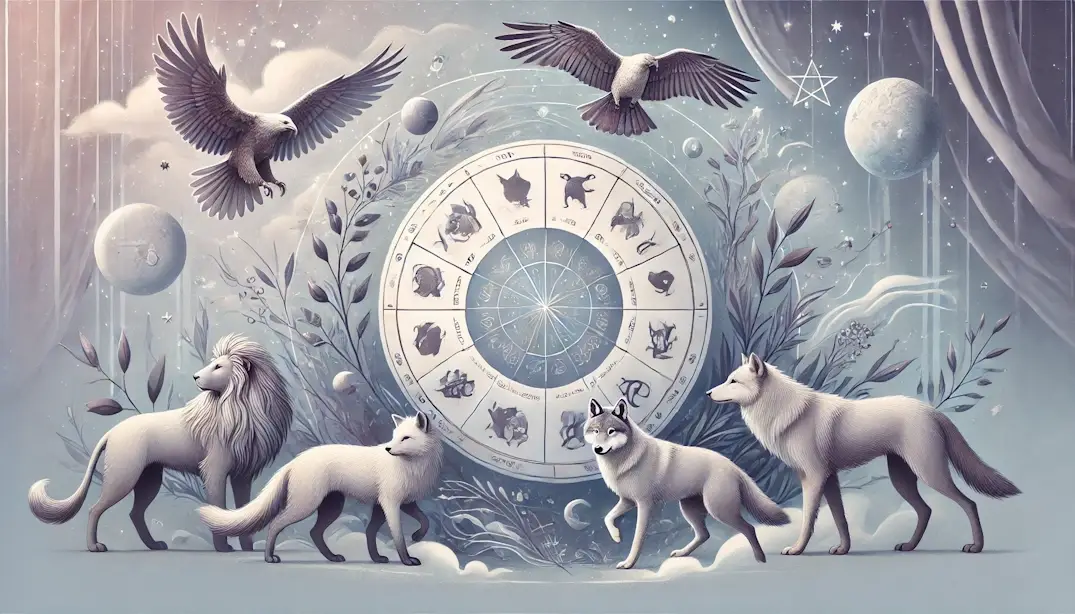

Is there a relationship between spirit animals and zodiac signs? The short answer would be “not really”, but there is sometimes a little bit of confusion over terminology. The idea of a spirit animal features in many cultures, as we will see later. It features in various guises as an individual spirit who will guide you on an astral level. The relationship between a spirit animal is purely one-to-one and the guiding spirit’s Will will be the deciding factor in the animal form that it adopts.
Your birth chart, however, does have an influence on which animals you have a special relationship with and those which help to define you. We do, for whatever reasons, all have animals that resonate with on a special level, those that we feel are kindred spirits. We can’t always explain why, but we know that we do. And it’s not always the obvious animals that harmonise with our signs, either. I’m yet to meet a Scorpio with a deep affinity for scorpions or a Cancer who has a special relationship with crabs. Whilst we often use metaphors based around the figurative representations of the Zodiac, Leo is the only sign that has a strong connection to its emblem in animal form.
Affiliated Animals
We are better taking of our animal allies or affiliated animals than spirit animals as this does rather misappropriate some very deep, specific and sacred aspects of various faiths and cultures. That’s not to say that your connection with your animal allies is not a spiritual one, nor that it is unimportant. Our animal allies can help us to see to see the world in a different way and help us forge a deeper connection with nature.
If you’re looking for your special animal ally, look no further. Just answer the questions below and we’ll reveal your companion creature.
[noptin form=3987]
Birth Signs and their Allied Animals
Discover the principal animal allies for each birth sign by clicking on the sign below:
Spirit Animals in Different Cultures
Native American Traditions
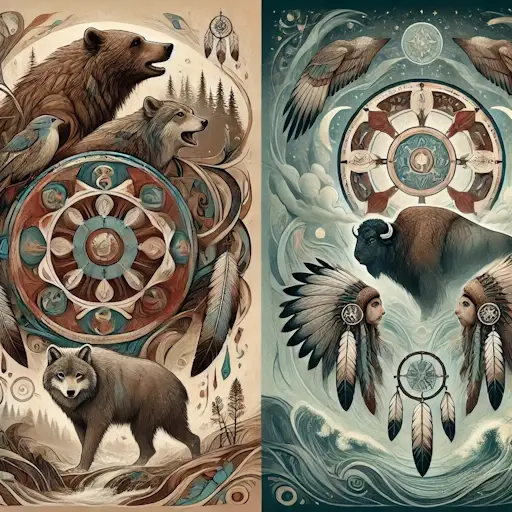
Totemism in Native American cultures is deeply rooted in spirituality and community identity. The term “totem” itself comes from the Ojibwe word “ototeman,” meaning “his kinship group.” Totem animals are considered sacred symbols representing clans or tribes, and each animal embodies specific traits and lessons.
Lakota Traditions: Among the Lakota and other Plains tribes, animals are seen as powerful spiritual guides. These animals, known as “wakȟáŋ,” provide wisdom and protection to the people. They are central to many rituals and ceremonies, and the relationship with the animal guide is considered sacred and lifelong.
Please note that “Native American” is a broad term and there is often a tendency for outsiders to incorrectly associate different cultural strands. We would heartily recommend this book for anyone seeking a deeper knowledge of American traditions.
Shamanism
Shamanic Practices are found in various cultures worldwide, including in Siberian, Mongolian, and indigenous South American communities. A common feature of shamanism is the belief in animal spirits or guides that assist shamans in their spiritual work.
Spirit Animals in shamanism are believed to offer protection, guidance, and knowledge. The shaman often connects with their spirit animal during rituals or visions. These animals are seen as manifestations of the shaman’s inner self or soul, helping them navigate the spiritual world.
Global Influence: Shamanism’s influence is seen globally, with similar concepts appearing in disparate cultures, illustrating the universal human connection to nature.

Greek Eudaemons
Eudaemons in ancient Greek philosophy and mythology were considered benevolent spirits or guiding forces that accompanied individuals throughout their lives. Although not always depicted as animals, the idea of a personal guiding spirit shares similarities with later concepts of spirit animals.

Daimons: In Greek thought, these beings were intermediaries between the divine and human realms, offering guidance and inspiration. Some were associated with specific animals, further tying the concept to the broader idea of spiritual animal guides.
Aztec Nahualism
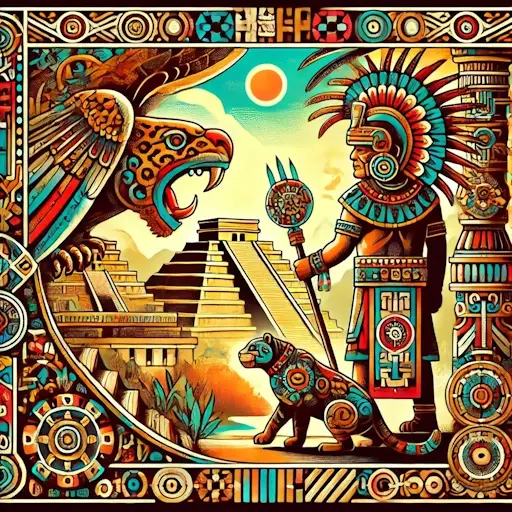
Nahualism in Aztec culture refers to the belief in a spiritual connection between humans and their animal counterparts, known as “nahual” or “tonal.” These animals were considered protectors and were thought to embody the characteristics of the person they were connected to. Nahualism is a very difficult word for Anglophones to pronounce, but it something close to ‘nah-wahl-ism‘.
Rituals and Practices: The Aztecs believed that each person was born under a sign that determined their animal counterpart, influencing their destiny and personality. This belief was deeply embedded in their cosmology and daily life.
Norse Fylgjur
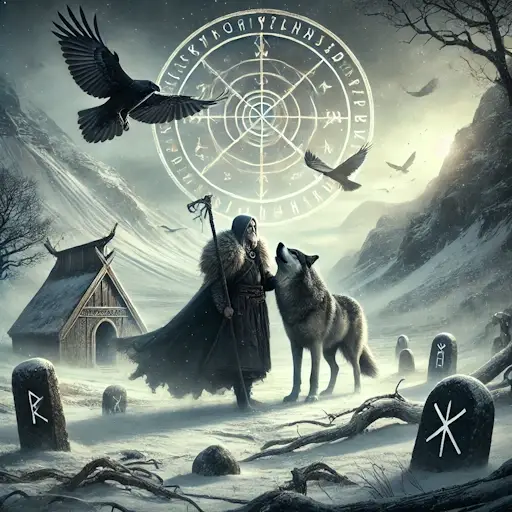
Fylgjur in Norse mythology are supernatural beings that accompany individuals, often appearing as animals. They represent a person’s fortune or fate and are thought to be a reflection of their character or future.
Spiritual Significance: The fylgja often appear in dreams or visions and are believed to be a part of the individual’s soul. The connection to the animal world is strong in Norse mythology, where animals frequently symbolize power, wisdom, and protection.
Celtic and Neo-Pagan Traditions
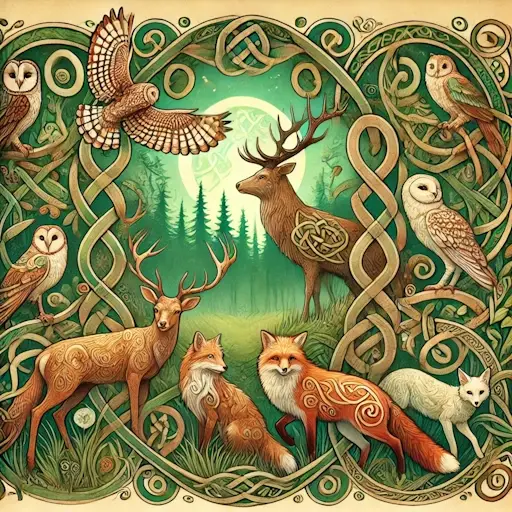
Celtic Totemism: In Celtic culture, animals were revered for their wisdom and strength, often seen as messengers from the Otherworld. The Celts believed in animal guides that provided protection and insight, a tradition that continues in modern Neo-Pagan practices.
Wiccan and Neo-Pagan Familiars: In Wiccan and Neo-Pagan traditions, a familiar is a spiritual entity, often in the form of an animal, that assists in magic and rituals. While not identical to totem animals, familiars serve a similar role in guiding and protecting practitioners.
Conclusion
Totemism and the belief in spirit animals are widespread, appearing in various forms across many more cultures than we have mentioned here. While each tradition has its unique interpretation and practices, the common thread is a deep respect for the natural world and the belief in a profound connection between humans and animals. These traditions remind us of the importance of living in harmony with nature and recognizing the wisdom and power that animals bring into our lives.
[noptin form=4657]